
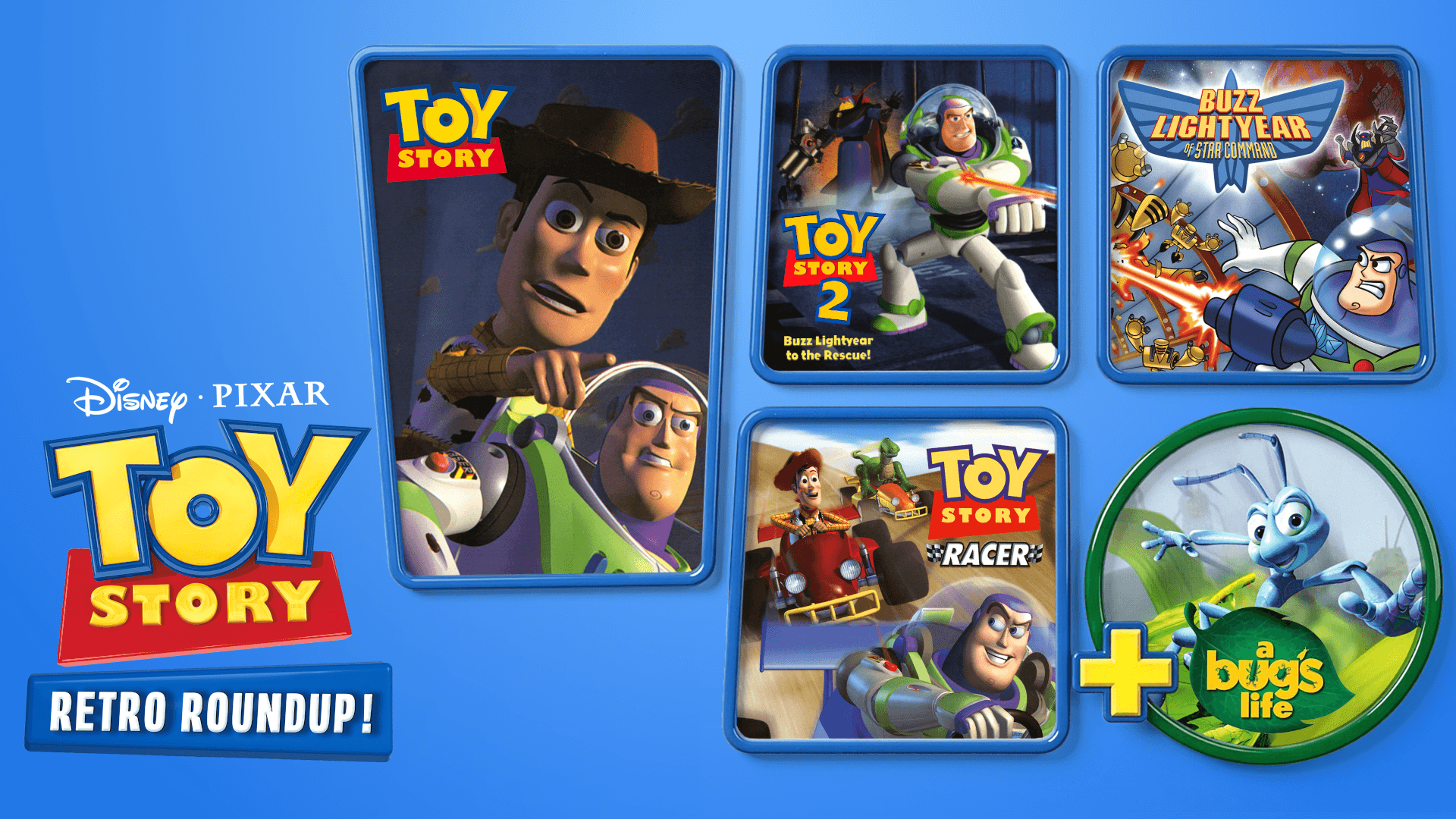
Toy Story: Retro Roundup! is another decent museum piece from the game preservation masters Digital Eclipse.
A fantastic retrospective collection of Traveller’s Tales (now TT Games) run of Pixar film tie-ins that brings together the console and handheld versions of Toy Story, A Bug’s Life, Toy Story 2: Buzz Lightyear to the Rescue, Buzz Lightyear of Star Command, and Toy Story Racer.
Since it’s a Digital Eclipse collection, there’s plenty of behind-the-scenes insights, including interviews with the developers, who explain all the clever tricks they used to bring Toy Story to the Mega Drive, the challenges of early 3D game development, and a fascinating segment with Jim Hanks (Tom’s brother), who has been the voice of Woody in everything but the films for 30 years.
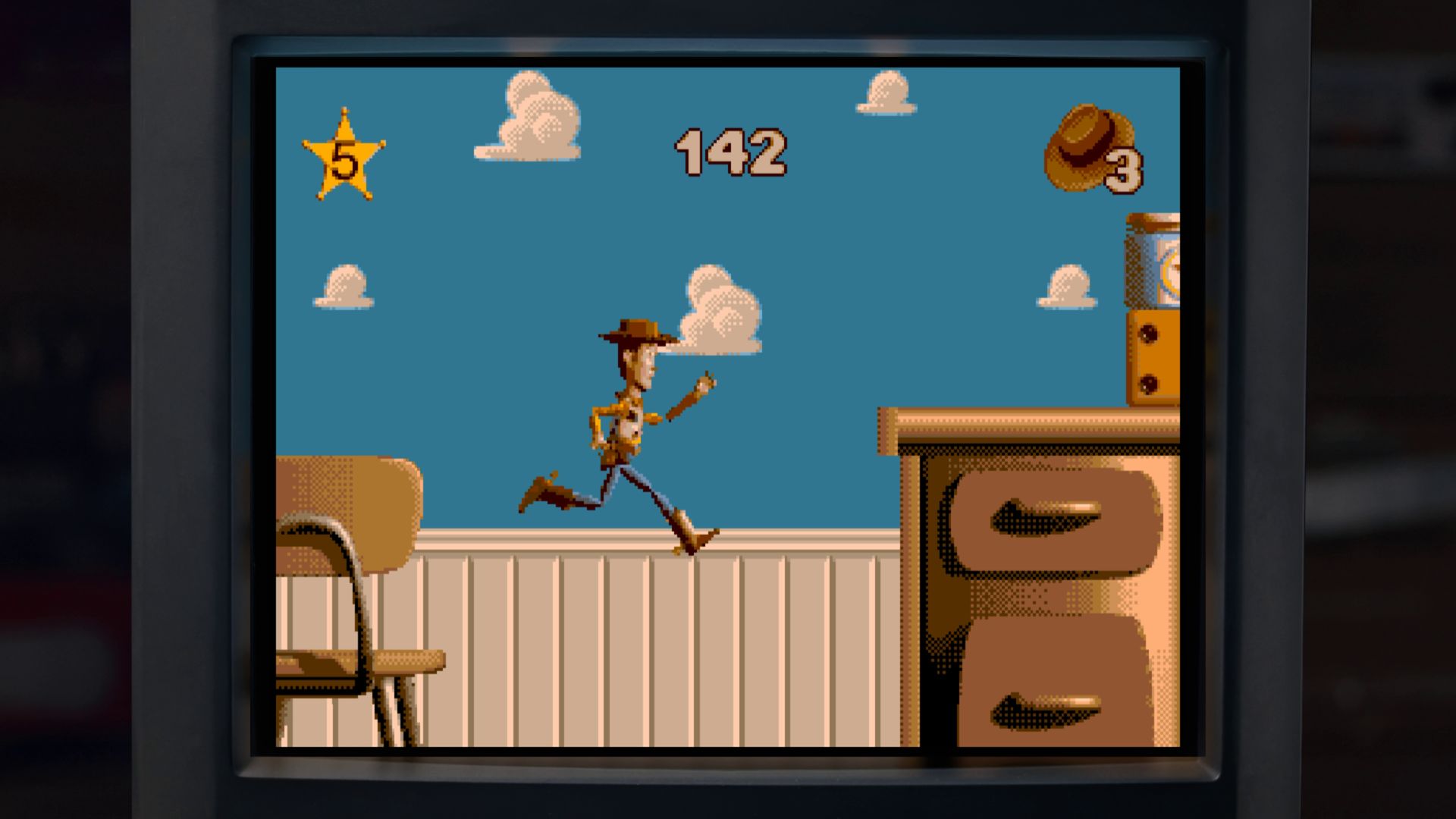
On the whole, it’s a great showcase of the technical prowess and ingenuity of the developers. When Donkey Kong Country rocked up on the SNES, it seemed it pushed the console to its limits. A year later, Travelers Tales released Toy Story on the Mega Drive and packed in some Doom-like levels for good measure.
The first time I played Toy Story, it felt like witchcraft. Now, some 30-odd years later, I’m playing on hardware that outpaces the rigs used to make the landmark movie itself, and I still find it bewildering what Traveller’s Tales accomplished on what was aging hardware, even at the time.
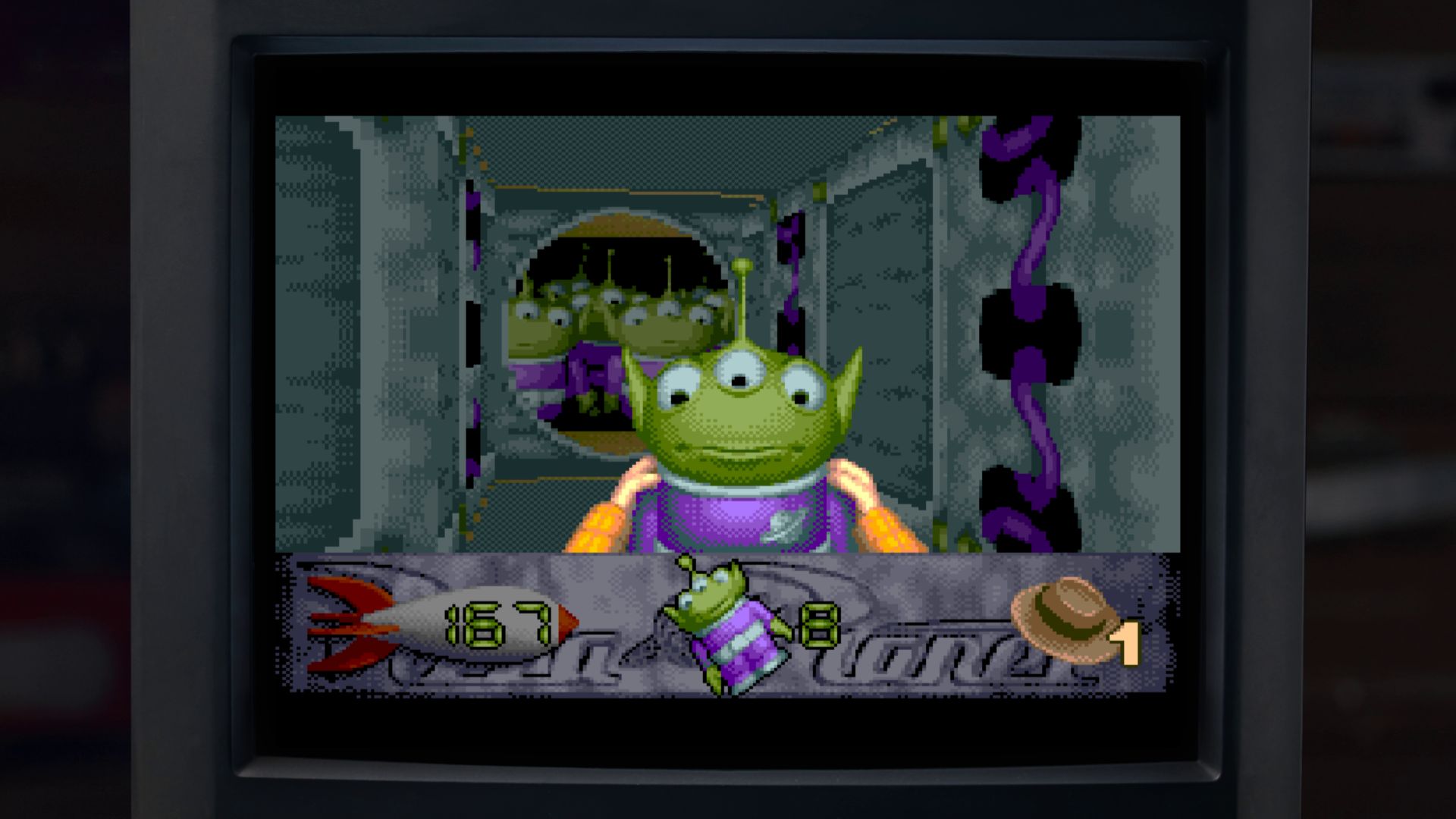
It’s a clear standout of the collection. An incredibly ambitious title that changed up the gameplay in ways we would take for granted today, but at the time, getting a game that effectively had you go from a DKC-style platformer to a 2.5D version of Micro Machines to first-person and back again, with character models taken directly from the movie. It’s still impressive.
The SNES version is also included, and it’s interesting to see the differences between the two rival systems on display. The SNES version is slightly more colourful. The Mega Drive has far better sound, better cutscenes, and more levels (the SNES version was made in seven months and they ran out of time).
The Game Boy version by Tiertex Design Studios is no slouch technically either, as it successfully converts the platforming sections of the Mega Drive version, including Woody’s sprite and animation data from the other characters, to hardware on a par with a pocket calculator.
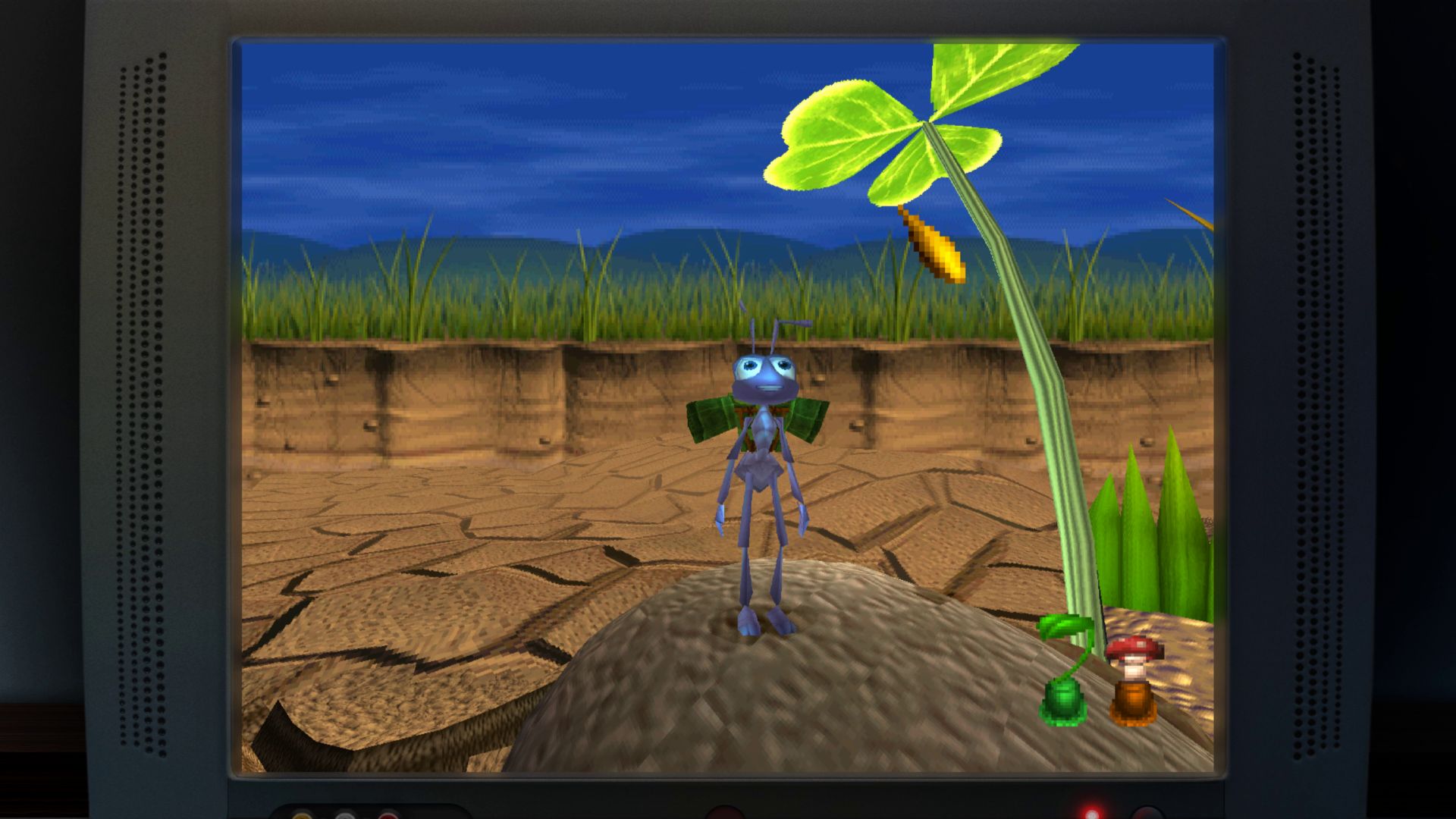
Moving onto A Bug’s Life, it shows how huge the leap between the PlayStation and the previous gen was. A 3D collectathon-style platformer, with cool plant-growing mechanics and surprisingly detailed models for the time. It still looks good; I’m not sure if this is a quirk of the remastering process, though, but you can also see the world basically stream in as you walk forward. The camera is also peak 90s. Uncooperative to a fault.
The Game Boy Color port is a straightforward platformer and probably my least favourite game on the collection. It’s slow; it’s dull. Flick is the wrong colour, and trying to get through even the opening level was an absolute slog.
Toy Story 2: Buzz Lightyear to the Rescue is probably the best game in the collection. It’s by far the most playable for a modern audience. Players go on a quest to rescue Woody from the Chickenman via a series of interconnected maps in the Mario 64 mould, with Buzz completing tasks for Ham, Potato Head, and RC while collecting Pizza Express tokens that open the next level on the overworld map.
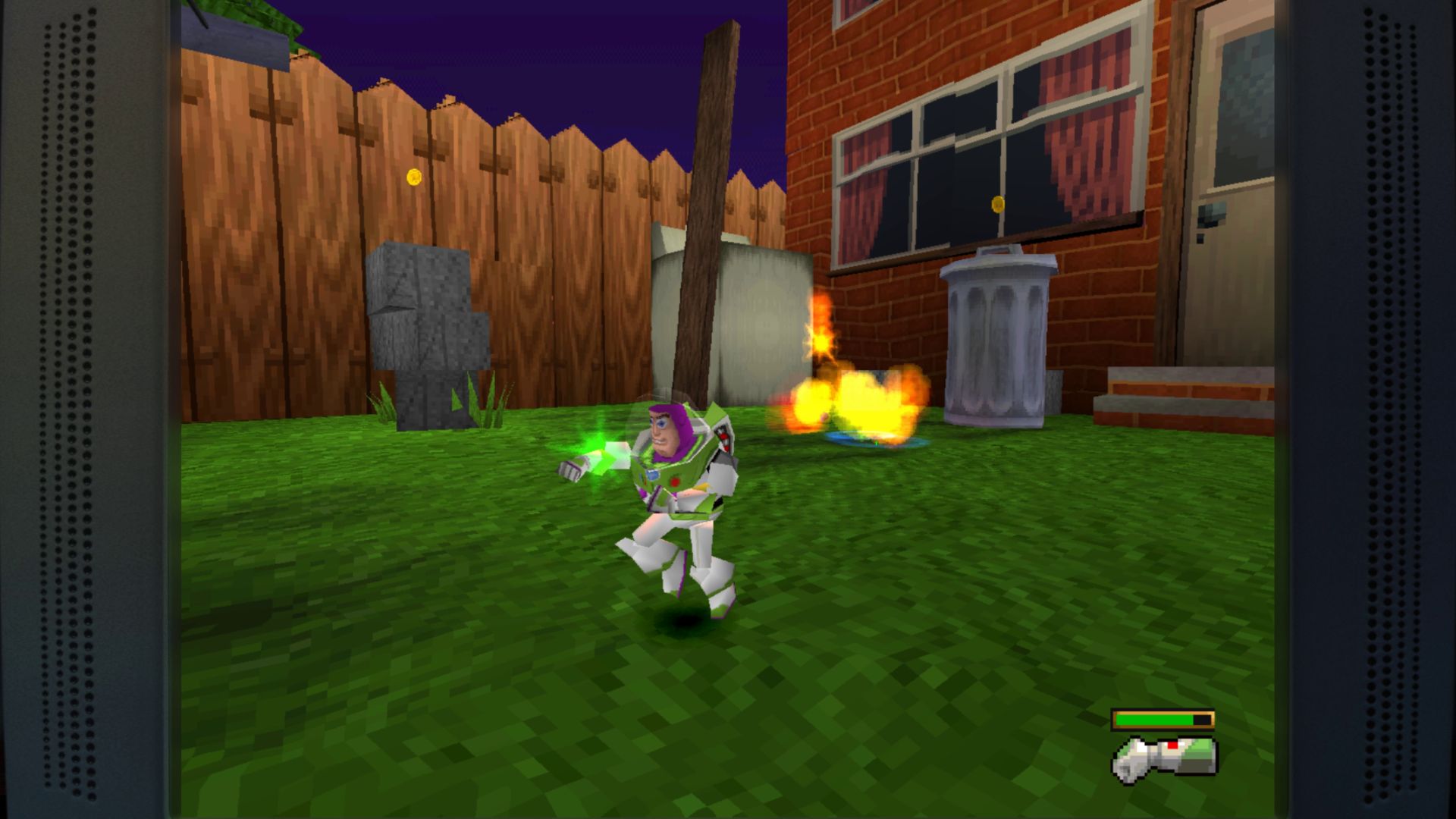
Though the gameplay is arguably more conventional than A Bug’s Life, it does feel, on a technical level at least, like an evolution of what they were attempting on Flick Adventure. Levels are bigger, interconnected, with upgrades unlocked on one level used to complete tasks in another. It also feels bigger, and the controls and platforming are tighter. Although the missions themselves seem repetitive, on the surface at least: one requires you to save five toys, Ham always demands 50 coins, Potatohead is missing a body part, RC wants a race, and there’s always a minboss to beat. But there’s just about enough variety and complexity in how they’re approached that they’re still a lot of fun.
The Game Boy Colour version, titled simply Toy Story 2, is an interesting little experiment, with some absolutely fantastic animation and sprite work considering the limited hardware. It’s basically a cross between an adventure game and a platformer. Each level, you’re given a goal, and it’s up to you to figure out how to achieve it. I’ll warn you, though. It’s not always clear how. Like in the first level, you can jump off the bedpost and fly around the level, which will take you to where you need to land to end the stage. If you didn’t know it’s something Buzz does in the movie, you would never try it, and even if you did, you might not think he could do it in the game, since, on first impressions, it seems to be a fairly rudimentary platformer.
To be fair, though, the training video feature does make a strange kind of sense now.
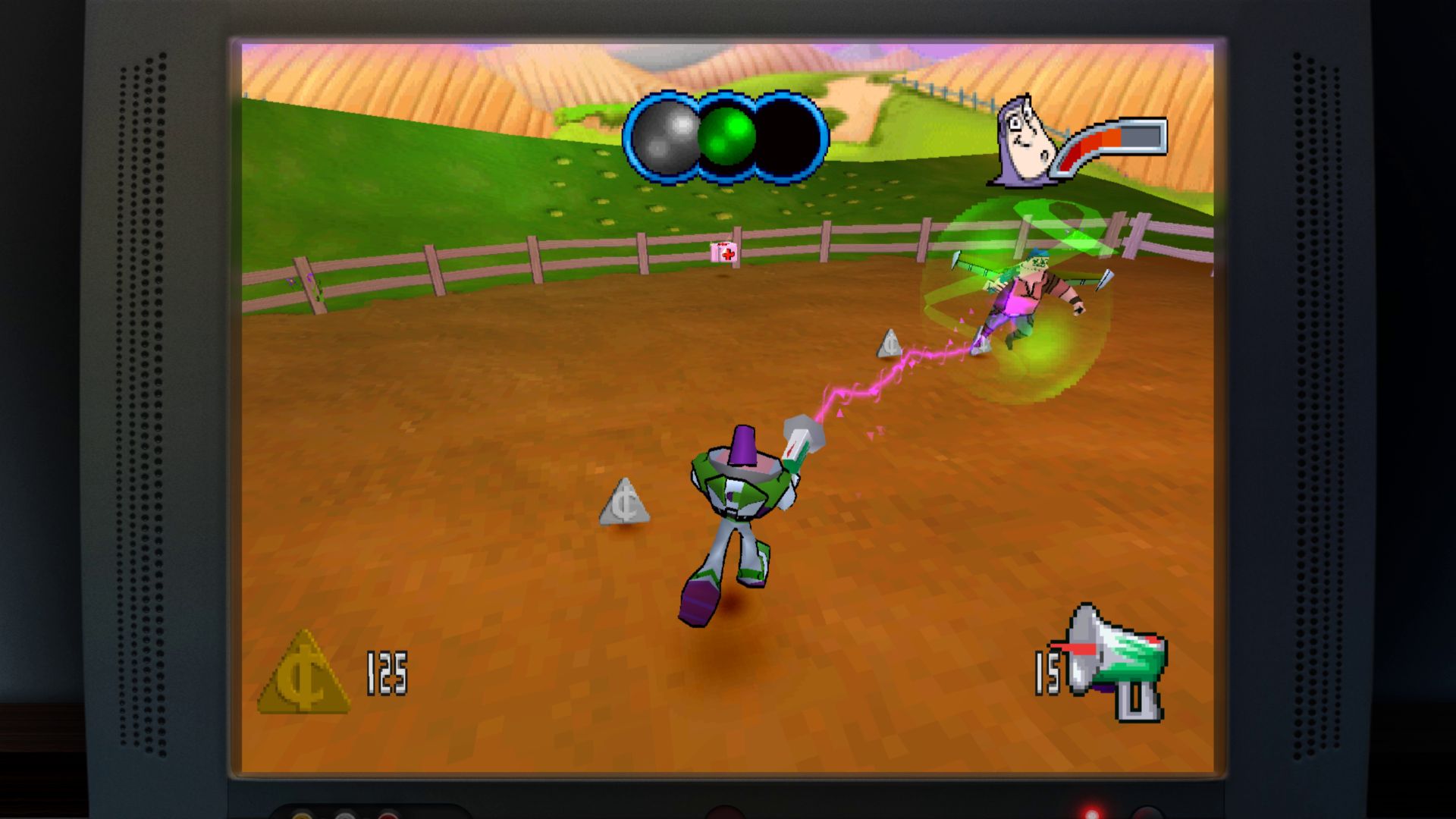
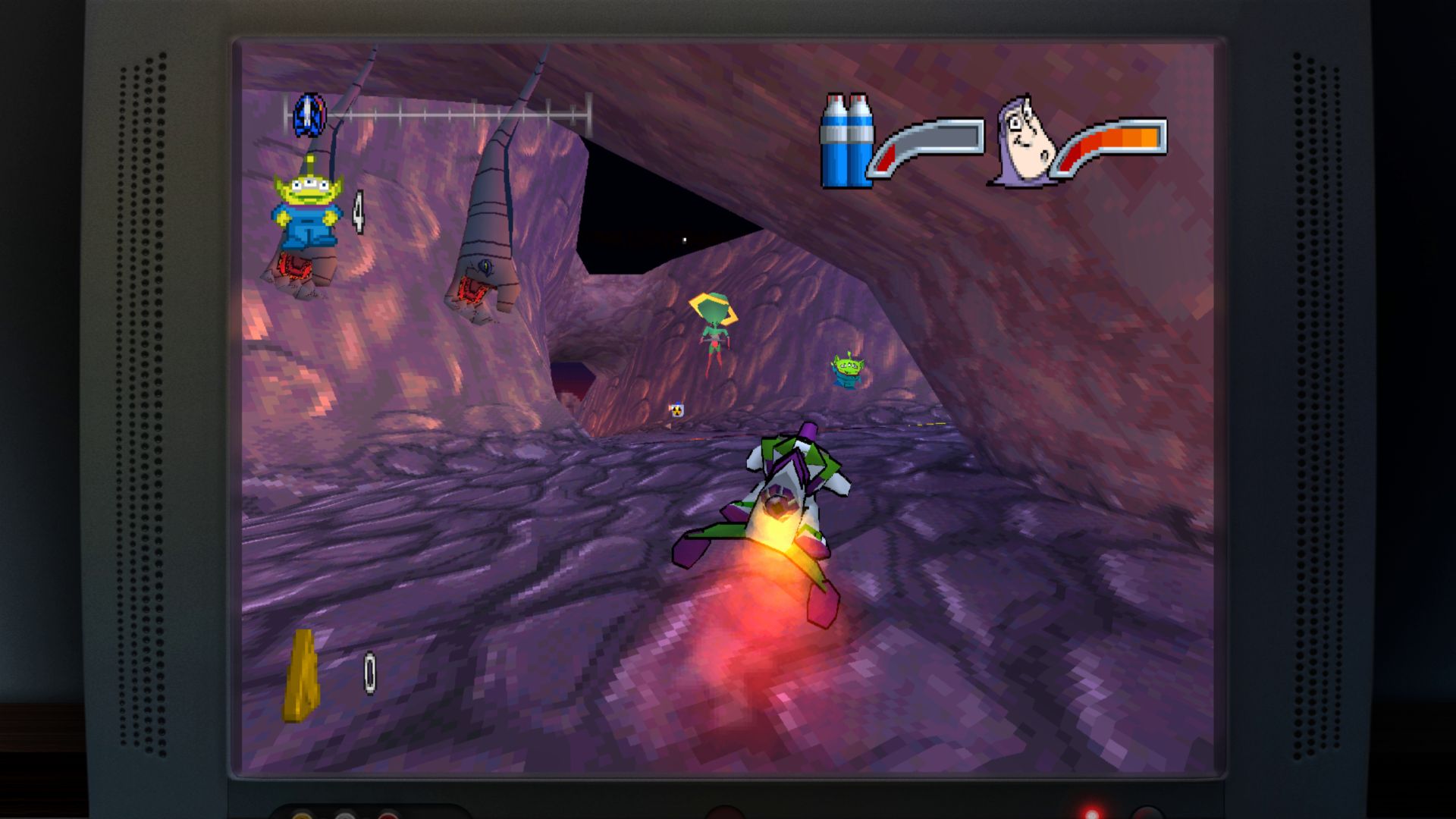
Buzz Lightyear of Star Command looks good, has some interesting ideas, but I just couldn’t get on with it. Based on the Saturday morning cartoon of the same name. BLSC sees Buzz chasing down a rogues’ gallery of villains from the TV show before eventually catching up for the inevitable end-of-level boss battle.
It answers the immortal question of what would happen if Chase HQ happened on foot. The answer is an absolute mess. Not only do you need to keep up with the suspect you’re chasing, but you also need to avoid all the usual platforming pitfalls and enemies you’d find in a third-person shooter. You also need to collect cash while chasing the boss to unlock better weapons, or help you keep up with your quarry. Pat your belly, rub your head, and not toss your controller straight through the TV.
The racing aspect is a needless twist that, in my mind, ruins an otherwise perfectly functional shooter. But hey, if we don’t experiment, how will we know what works and what doesn’t?
The Game Boy Colour version fares a little better, though, as it plays more like a scrolling shooter like Gun Smoke or Ikari Warriors. Although the time limit is a little too tight for my liking.
Finally, there’s Toy Story Racer. A kart racer where you play as the cast of Toy Story. It makes sense on paper: Toy Story has a big cast of well-designed, distinct characters that could work well in a mascot racer. They can race around the neighbourhood; that’s all huge because toys are small, you see. What you effectively get is something between Mario Kart and Micro Machines. It’s got a surprisingly complex physics engine, and each track is an open map full of potential shortcuts and power-ups. It’s a clever idea that works fairly well. Though some shortcuts are far more useful than others, your cart’s handling is surprisingly delicate, and your fellow racers are absolutely merciless.
I’m thankful Toy Story Retro Roundup! has a rewind button, because the times one wrong turn, unfortunate collision, or missed turn torched my chances of winning were far more numerous than I would like to admit.
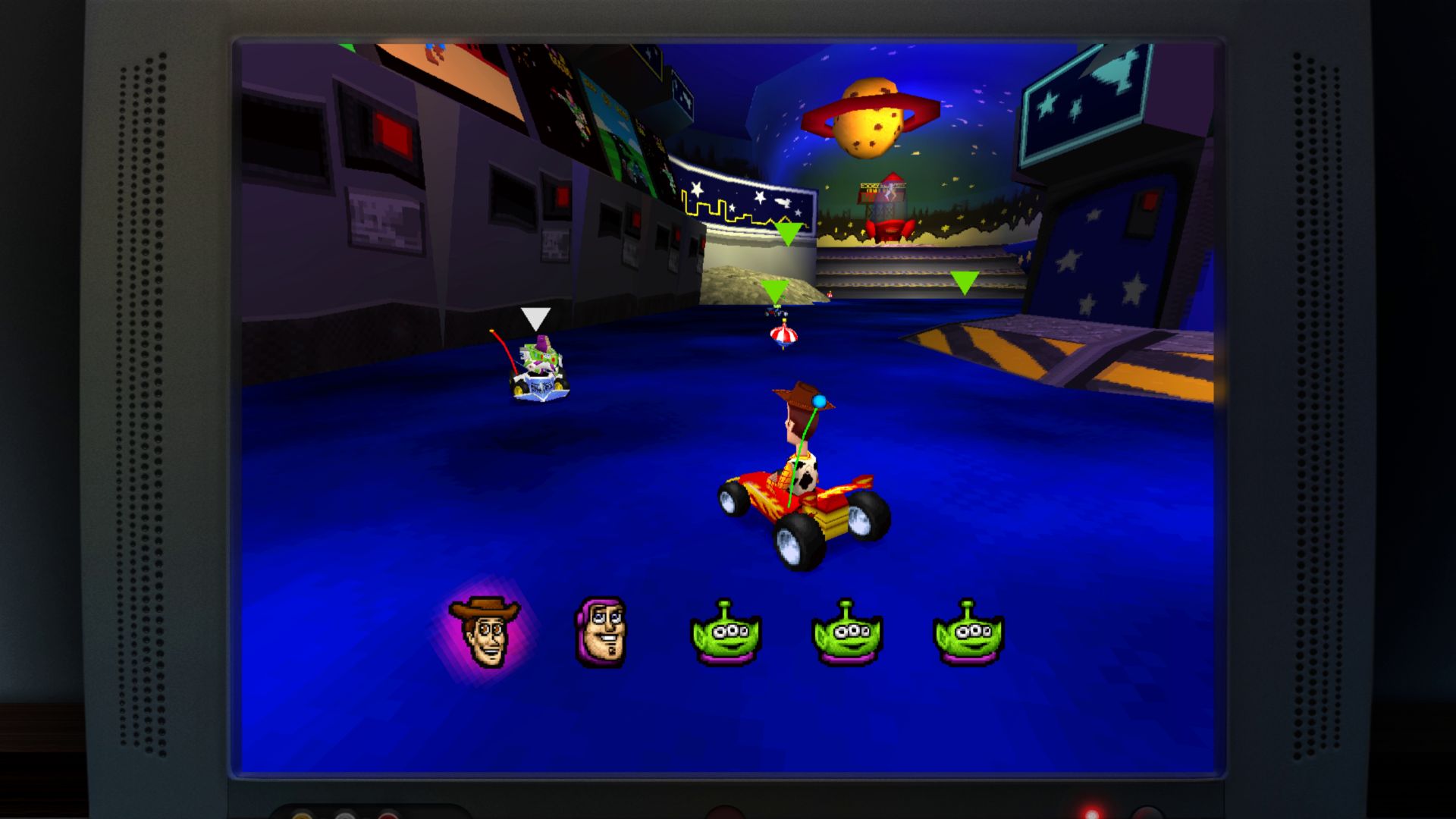
If you don’t crash or get rammed off something, it’s a pretty fun time. There is also a mountain of tracks, racers, race types and challenges to unlock on your quest to find all 200 of Andy’s toy soldiers.
The same can’t be said of the Game Boy Colour version, which, although technically impressive, since it does some clever things with FMV to create the illusion of 3D while you’re speeding around the track. The actual act of racing, though, I didn’t find particularly enjoyable. I’m happy it’s on the collection. But learning about how it was made is far more enjoyable than actually playing it. As such, it feels more of a curio, and a cool technical showcase for the GBC than something I would want to play for any length of time.
VERDICT
Toy Story: Retro Roundup! is the kind of collection that fans of Toy Story, anyone who grew up playing kids’ games in a pre-LEGO Star Wars world (ironically made by the same studio) or appreciate the craft of game making, especially when limited hardware is pushed to do crazy things it shouldn’t be able to, are likely to get a kick out of.
On the one hand, Digital Eclipse should be applauded for their dedication to not only preserving games, but helping to shed light on the processes that make them important or unique, and taking the time to explore the craft of making games itself.
On the other hand, though, it is hard to rate this collection. As an exhibition, it’s top-notch. I have a newfound appreciation for how these games were made, and we have a backup Hanks, who is ever bit as charming as his older brother. But as a collection of 11 games, you might want to play; it’s harder to recommend. The handheld titles are technically proficient, but for the most part feel like curios compared to their home console brethren. Even the main attractions show their age, though they admittedly fare better.