
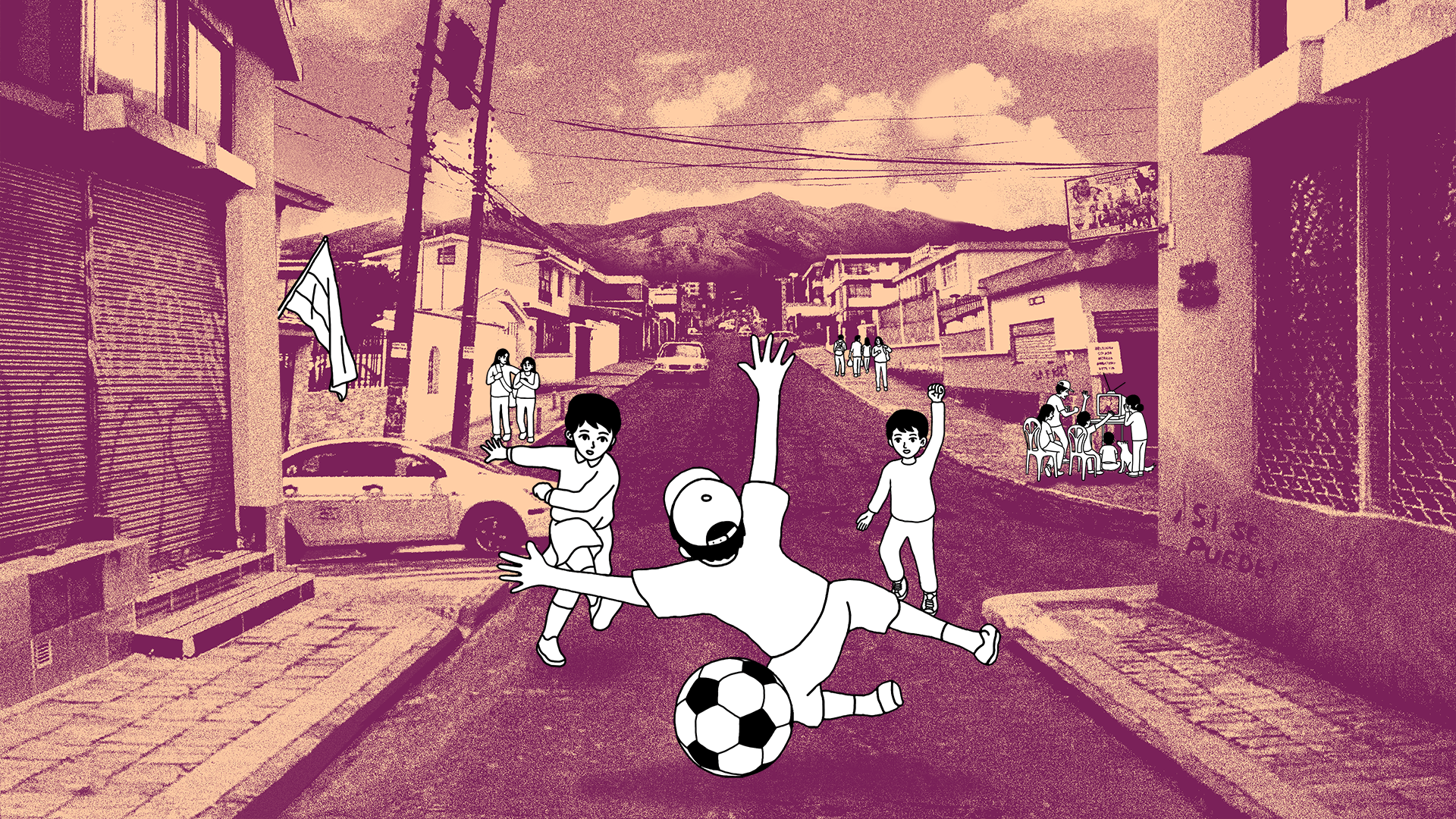
Despelote hit me far harder than I thought it would.
A delightful and heartfelt slice of life tale about a footie-obsessed eight-year-old from Ecuador that follows his life while the national team is on the cusp of qualifying for the World Cup for the first time, to the backdrop of a country in economic freefall, is the kind of thing this condesending snarky critic would normally just point to, scream art at a million times and then go have another congratulatory wank.
But I press play, and I’m instantly transported back to my own childhood. A part of me that I have quietly repressed for the best part of 30 years returns. The year is 1996, and a 10-year-old boy is playing that well-worn knock-off copy of Sensible Soccer his mate’s dad made for him on his aging Amiga 600. His Thrustmaster still just about works; he can’t move straight up, but it’s fine because Southgate is zigzagging up the wing, he takes a shot, and he misses. (Foreshadowing is a narrative device)
30 years later, and I’m playing a fun mock-up of that simple yet effective style of arcade football game you rarely see these days. If ever. In-game, my tiny white bob is booting another blob up the pitch. I’m trying to get to grips with the twin stick controls (I think press a button to pass, hold for shoot would be better). The camera pulls back in a nice little meta twist. People are talking in the room, dinner is mentioned. It doesn’t matter. Then the TV is turned off by an annoyed adult.
And I’m back there. I’m 10 again. I’m relitigating a single shot, that now notorious penalty that saw the overwhelming weight of expectations from a country convinced we were going to make it to the Final, crash down on another poor sod called Gareth.
I guess that’s the universal appeal of sport. It brings people together. It’s an escape from a world that is otherwise falling apart, and it’s that feeling of hope and the simple joy of kicking a ball around a park with your friends, figuring out how to get the damn thing down from the tree, the neighbour that refuses to give it back. That’s what Despolete perfectly taps into.
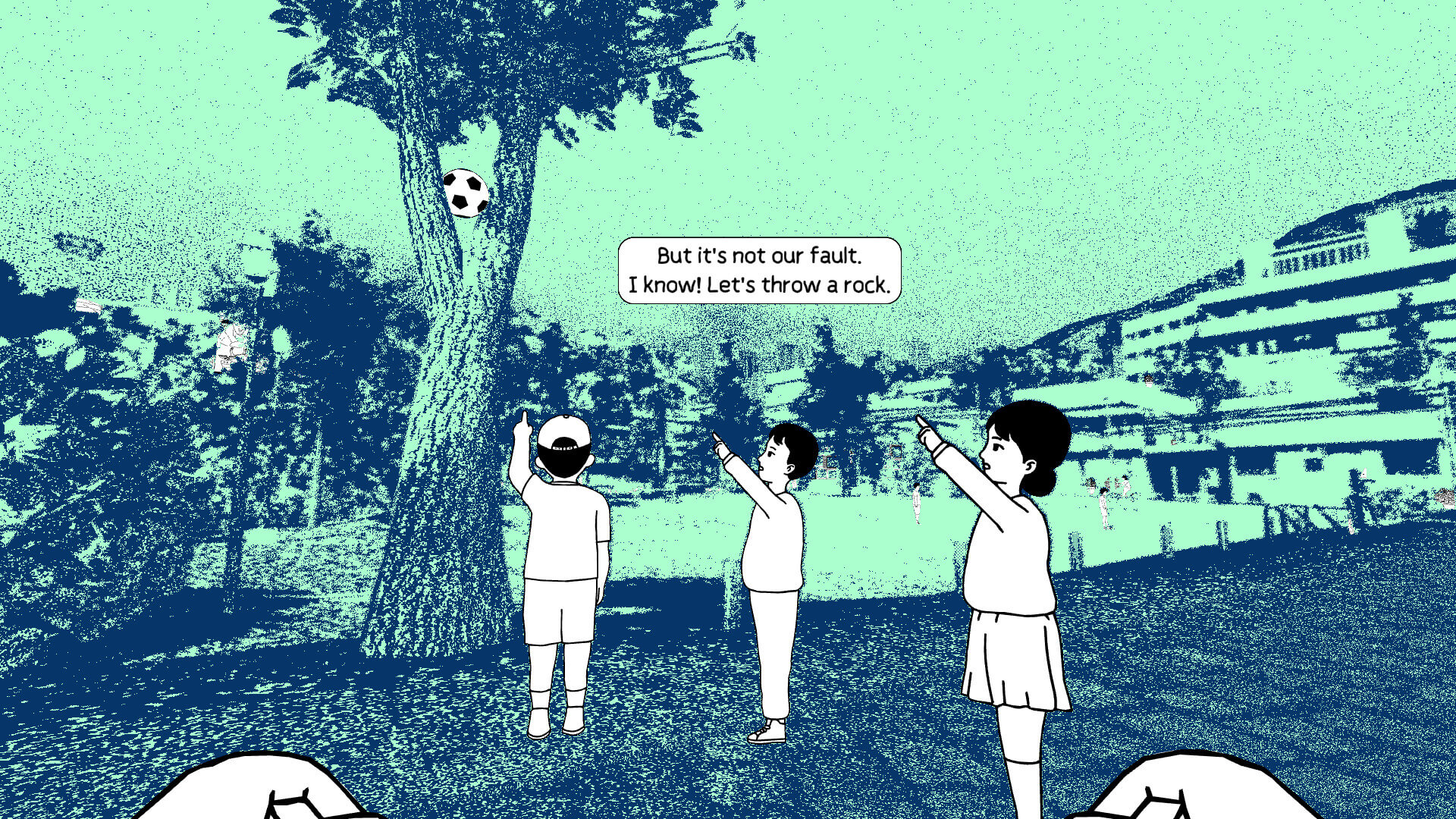
Then I think about the controls that require you to pull the right stick back to power up your shot; they’re wonky by design. Anyone can kick a ball. But to actually be good takes a certain level of skill and practice.
It’s perfect for the personal, and weirdly relatable story, even several thousand miles away, that developers Julián Cordero and Sebastian Valbuena are effectively telling. The highly stylised, mostly monotone graphics feel like they’ve been yanked from a bootleg Master System cart that is punching way above its weight, though in truth, any attempts to make a game like this on a system that old would probably end with a house fire when you tried to test the prototype cartridge.
It’s a nostalgic, blurry tale told over four days in 2001 when the people of Ecuador felt united, felt hopeful, despite the country itself becoming a difficult place to live.
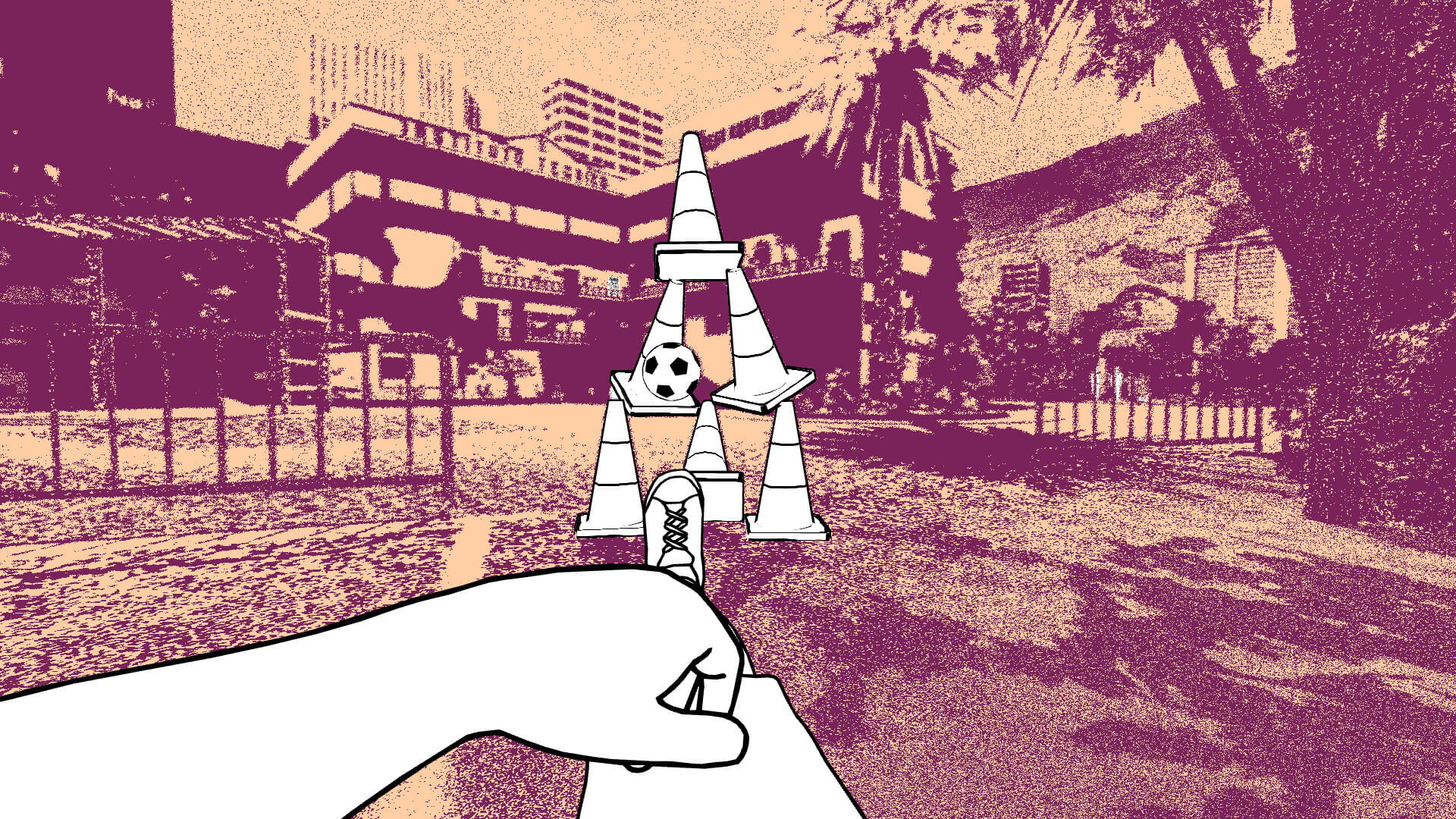
It’s mundane in a cozy way. The characters are well-drawn and appear like the scribbles of a budding young artist; there’s a kind of Quentin Blake meets back of a textbook charm to them, and the whole thing has a wonderful sense of time and place. Our precocious young protagonist, Julián, tries to skip school with his friends, messes up his suit before being dragged to a wedding, and spends plenty of time kicking a ball, or anything ball adjacent, around the sleepy streets near his home in Quinto, Ecuador.
However, it’s when the devs pull the curtain down, take off the rose-tinted specs, and show you how difficult it was to make this distinctly personal game, that it truly shines. They had to hire a bodyguard to protect their soundman when he was recording ambient noise in the park, which is the focal point of much of the game. The scan of the park they used is the very definition of a warts-and-all superscan. The only footage they could find of the goal that (Spoilers) saw Ecuador qualify for the World Cup with Ecuadorian commentary has an advert playing over it when the ball hits the back of the net.
It’s messy. But life is messy, sport is messy, and trying to reconcile your memories against objective reality is often an utter shambles. There’s a word for it in Spanish that’s just on the tip of my tongue.